
FACILITY SOLUTIONS

Facility Solutions Shaped by Product, Process, Risk and Market Requirements

A facility category is only the starting point. Process, contamination risk, equipment, flows, utilities and the target market determine the engineering basis.

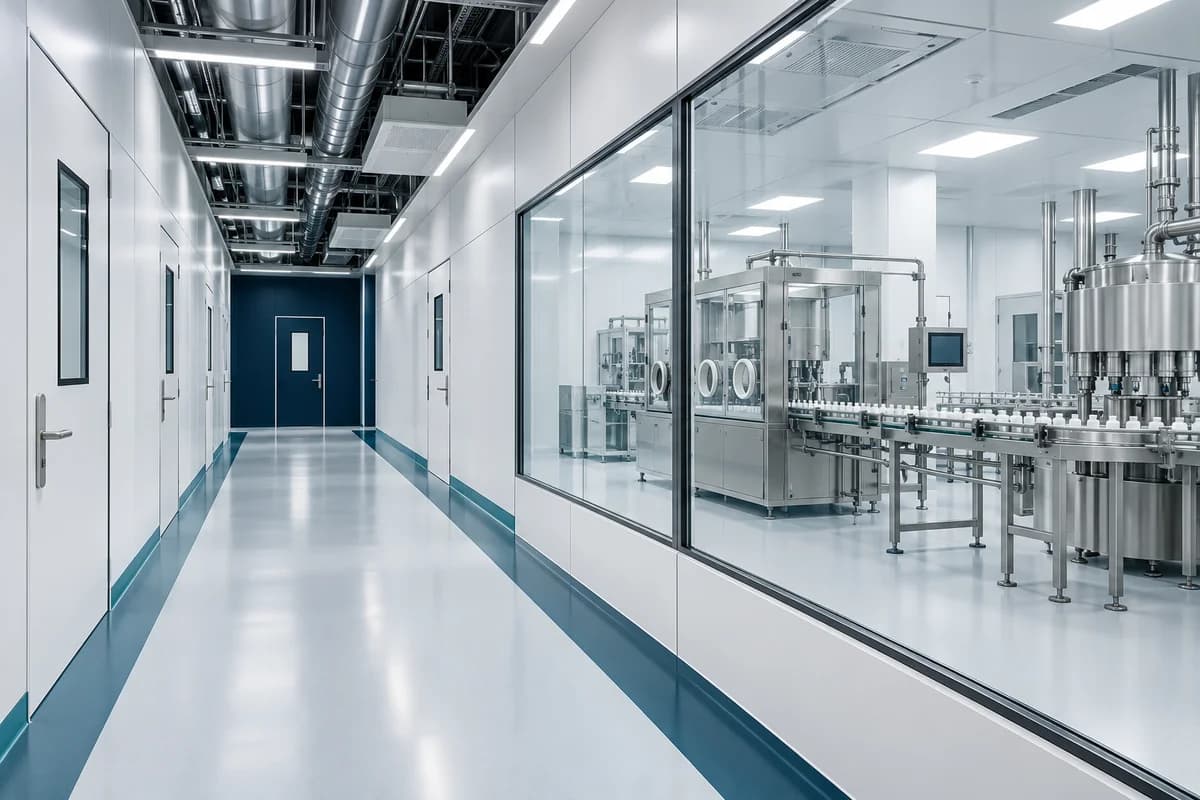
Conceptual cleanroom corridor and adjacent production spaces
AI-generated engineering concept — not a completed GENO project.
01

Pharmaceutical Manufacturing

Facility planning for oral solid dose, liquid, topical and other pharmaceutical operations, shaped around the selected process, containment needs and target-market basis. Scope can cover new facilities, expansions, production transfers or upgrades, with exact capabilities confirmed through the project URS.

Typical use cases

  • Oral solid dosage
  • Liquid and topical production
  • Packaging and support areas

Cleanroom considerations

Classification, zoning and pressure relationships follow product risk, process openness and the applicable framework.

Process considerations

Layouts coordinate dispensing, production, holding, transfer, washing and packaging around the approved process narrative.

Utility considerations

Demand profiles may include purified water, compressed gases, extraction, power resilience and process drainage as defined by equipment needs.

02

Aseptic & Biotechnology Facilities

Concept and engineering coordination for aseptic processing and biotechnology environments where contamination control, segregation and environmental stability require early alignment. GENO structures facility and system interfaces around the contamination control strategy and the qualification responsibilities defined for the project.

Typical use cases

  • Formulation and filling support
  • Cell-culture process spaces
  • Sterile transfer and component preparation

Cleanroom considerations

Room grades, airlocks, barrier interfaces and pressure cascades are developed from risk assessment and the selected processing concept.

Process considerations

Open and closed operations, cleaning, sterilization, transfer and intervention points drive adjacencies and containment decisions.

Utility considerations

Clean utilities and critical environmental systems are defined against process loads, quality attributes and redundancy expectations.

03

Medical Device Facilities

Controlled manufacturing environments for device assembly, component preparation, packaging and related operations. Planning responds to product cleanliness, particle sensitivity, material movement and inspection needs without applying pharmaceutical classifications where they are not justified by the project risk basis.

Typical use cases

  • Assembly and inspection
  • Primary packaging
  • Controlled storage and transfer

Cleanroom considerations

Classification and environmental control are selected from product and process requirements, cleanliness risk and applicable quality standards.

Process considerations

Workstation sequence, inspection, rejection, component feed and packaging flows guide the layout and support spaces.

Utility considerations

Electrical distribution, compressed air, extraction and environmental monitoring interfaces follow production equipment and risk needs.

04

Laboratories & R&D Environments

Flexible laboratory and development environments coordinated around workflows, equipment, samples, personnel safety and future change. GENO integrates architectural, ventilation, utility and equipment requirements while maintaining clear boundaries for specialist laboratory systems and local safety approvals.

Typical use cases

  • Analytical testing
  • Microbiology support
  • Process development

Cleanroom considerations

Environmental control ranges from general laboratory ventilation to classified or contained rooms, depending on the activity and risk assessment.

Process considerations

Sample receipt, preparation, testing, retention and waste flows are separated where necessary and linked to equipment needs.

Utility considerations

Laboratory gases, purified water, extraction, drainage, emergency power and monitoring are coordinated at equipment connection points.

05

Healthcare & Special Medical Environments

Selected controlled healthcare and special medical spaces where air quality, pressure relationships, hygiene and operational continuity require coordinated engineering. The clinical brief, local healthcare requirements and specialist equipment responsibilities must be confirmed before scope and performance criteria are established.

Typical use cases

  • High-control treatment zones
  • Sterile support spaces
  • Special air-quality environments

Cleanroom considerations

Room pressure, filtration, recovery and hygiene requirements are defined from the clinical function and local requirements.

Process considerations

Patient, staff, clean supply, used material and emergency flows inform zoning, access and support-room relationships.

Utility considerations

Medical gases, critical power, communications and specialist services are coordinated with qualified local designers and authorities where required.

06

Advanced Clean Manufacturing

Clean and controlled production environments for sensitive manufacturing beyond conventional pharmaceutical applications. Engineering starts with the product and process risk: particles, temperature, humidity, electrostatic control, chemical exposure, vibration and utility stability are considered before performance criteria are selected.

Typical use cases

  • Particle-sensitive assembly
  • Precision production
  • Controlled processing and packaging

Cleanroom considerations

Particle class and environmental criteria are tied to process sensitivity, operating state and verified product needs.

Process considerations

Equipment arrangement, material handling, maintenance access and contamination sources are mapped before room concepts are fixed.

Utility considerations

Stable power, process gases, extraction, cooling and environmental control are integrated around the actual production equipment.

Applicable standards, classifications, deliverables and qualification scope are defined for each project through the URS and contract.

NEXT PROJECT STEP

Planning a Pharmaceutical Facility?

Share your product, capacity, target market, site information and current layout. These inputs will help structure the first technical discussion and identify the next engineering steps.